

Orchid
Habitat Loss
Click on picture or text
next to the picture to go to webpage.Australia
 Calochilus
pulchellus
Calochilus
pulchellusUnfortunately these events were overtaken by the approval for the residential development by both the state and federal governments, as the latter approval was made public in the last days of July 2007. The problem was obvious, as at that time five of the 25 known plants occurred on this site.
Calochilus pulchellus update 2008
Following the translocation in 2007 of several plants of Calochilus pulchellus from the path of a residential development I conducted several follow-up visits to hand water all plants to hopefully sustain them during what is the trauma of adjustment to a new site.
 Corunastylis
superba
Corunastylis
superbaCorunastylis superba (syn. Genoplesium superbum) is under consideration for a threatened listing. It is known from a single site (40 plants) about 85 km (53 miles) from the coast.
 Incidental
Damage
Incidental
DamageDamage and loss of habitat to Pterostylis baptistii, Plectorrhiza tridentata, and Sarcochilus falcatus.
 Prasophyllum
affine
and Cryptostylis
hunteriana
Prasophyllum
affine
and Cryptostylis
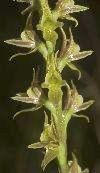
hunterianaPrasophyllum affine The total number of P. affine over the three known sites is 1150 with just 81 plants secure in a National Park. All others are on private land. Very few plants of C. hunteriana are situated in National Parks or reserves.
Prasophyllum affine, Cryptostylis hunteriana and Rhizanthella slateri update 2008
 Severe fire on
Alum Mountain at Bulahdelah - Habitat for Cryptostylis hunteriana
and Rhizanthella slateri
Severe fire on
Alum Mountain at Bulahdelah - Habitat for Cryptostylis hunteriana
and Rhizanthella slateriFire Retardant effects on Orchids and Habitat
Bolivia
 Bolivia
deforestation Tablas Montes area in Chapare
Bolivia
deforestation Tablas Montes area in ChapareThe picture is of the Tablas Montes area in Chapare, Bolivia, where deforestation goes on unhindered. This particular area was severly cut ten years ago, and in some remaining patches we found the second ever plant of Masdevallia vasquezii, the only site for Masdevallia burianii, and also the only known locality for Odontoglossum dracoceps.
Ecuador
 Deforestation
Central Ecuador
Deforestation
Central EcuadorThe bulldozed area is north of Mera, central Ecuador, from an area called Rio Anzu Reserve that is being bought and protected by the EcoMinga Foundation. The picture was taken years ago when settlers first started to cut their way through the virgin forest.
Indonesia
 Bukit
Barisan Selatan National Park, Sumatra
Bukit Barisan Selatan National Park covers a total area of 3,568 km²
(881,668.5 acres) on the southern tip of Sumatra, Indonesia stretching
from Tanggamus and West Lampung regencies in Lampung to Kaur regency in
Bengkulu. It started as a Wildlife Sancutary in 1935 becoming a
National Park in 1982.
Bukit
Barisan Selatan National Park, Sumatra
Bukit Barisan Selatan National Park covers a total area of 3,568 km²
(881,668.5 acres) on the southern tip of Sumatra, Indonesia stretching
from Tanggamus and West Lampung regencies in Lampung to Kaur regency in
Bengkulu. It started as a Wildlife Sancutary in 1935 becoming a
National Park in 1982. Gunung
Leuser National Park, Sumatra Gunung Leuser National Park
established in 1980 covers 7,927 km² (1,958,797 acres) in northern
Sumatra, Indonesia. The national park is part of a UNESCO World
Heritage Site, Tropical Rainforest Heritage of Sumatra. It represents a
significant natural habitat for in situ conservation because of its
large diversity of flora, fauna and ongoing ecological and biological
processes.
Gunung
Leuser National Park, Sumatra Gunung Leuser National Park
established in 1980 covers 7,927 km² (1,958,797 acres) in northern
Sumatra, Indonesia. The national park is part of a UNESCO World
Heritage Site, Tropical Rainforest Heritage of Sumatra. It represents a
significant natural habitat for in situ conservation because of its
large diversity of flora, fauna and ongoing ecological and biological
processes.Related: Biofuels and habitat
 Fire
damaged forest, Central Sulawesi
Fire
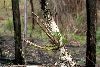
damaged forest, Central SulawesiThe hillside in the foreground had been ablaze a day or two before we arrived (it was still smouldering in places), and the orchid-rich patch of riverine forest in the foreground gully was severely damaged along the far edge. It was clear that every year the same hillside got burned and the forest margin got nibbled away, one strip at a time.
Turkey
 Salepi Extinction, Salepi
In the middle of Athens, outside the modern hectic Central Market on Athinas not far from Europe’s oldest shopping mall, as well as elsewhere in the city, are the occasional mobile carts vending salepi — a hot, aromatic, sweet, thick drink traditionally made from the powder of dried and pulverized orchid tubers, sugar, milk and cinnamon and stored in big brass or copper pots.
United States of America
41 year study on the decline and loss of Orchids of the Catoctin Mountains of Frederick County, Maryland, USA
Abstract A 41-year study (1968–2008) of the orchids of the Catoctin Mountains, Frederick County, Maryland reveals that 19 of 21 species have experienced precipitous declines. Four of these species are currently considered Threatened or Endangered by the State of Maryland and another two are considered Rare. Annual census data at 167 sites from throughout the Catoctin Mountains on protected and unprotected lands (private and public) show a loss of three species from the study area, a decline of >90 % (ranging from 99 to 91 %) in seven species, and a decline of <90 % (ranging from 51 to 87 %) for nine species. Each species was analyzed using Ordinary Least Squares Analysis to show trends and document corresponding R2 and p values. We tested the hypothesis that this decline is due to intensified herbivory by white-tailed deer. The overall orchid census data is significantly inversely-correlated (R = −0.93) to the white-tailed deer harvest data of Frederick County (a surrogate for population size), which includes the entirety of the study area. Platanthera ciliaris showed a huge expansion at a single site explicitly managed for this species otherwise this orchid showed a decline similar to the other species. Proper management is critical for the continuation of the orchid species in this study, be it control of the white-tailed deer herd or combating woody plant succession in the case of P. ciliaris.
 Cypripedium
candidum, Platte County, Nebraska
Cypripedium
candidum, Platte County, NebraskaThis location is essentially a lost cause (and it was before the road grading activity) due to its location near development and adjacent to a site that is to be developed. There is a housing development right across the road from this site. Plus the site is not ideal habitat anymore as it is overrun with smooth brome and other weedy invasives.
 Greenswamp,
North Carolina
Greenswamp,
North CarolinaIn the southeast corner of North Carolina there is a habitat with high biodiversity and unique species called the Green Swamp. The Green Swamp is one of the best remaining examples of longleaf pine savannas, bay forests and pocosins ecosystems left. The World Wildlife Fund has identified the Green Swamp as one of the top ten ecoregions in North America for the number of species of plants and animals.
 Published in August 2012 AOS Orchids Magazine
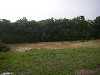 Former Bog now a Motorcycle /ATV pit
Mountain Fellowship Center, Fayette County, PA
Several wetlands sit on top of acidic sandstone. The wetlands consist of ponds, bogs, and seepage meadows. Eight species of orchids have been observed at one time or another in this area. As Mountain Fellowship Center is open to unrestricted recreational use. It is a favorite place for motorcycles and ATV's.
Low bandwidth link to story minus Video and Map
To recieve updates on news about the OCC e-mail: info@orchidconservationcoalition.org